
Date:
Jan 19, 2026
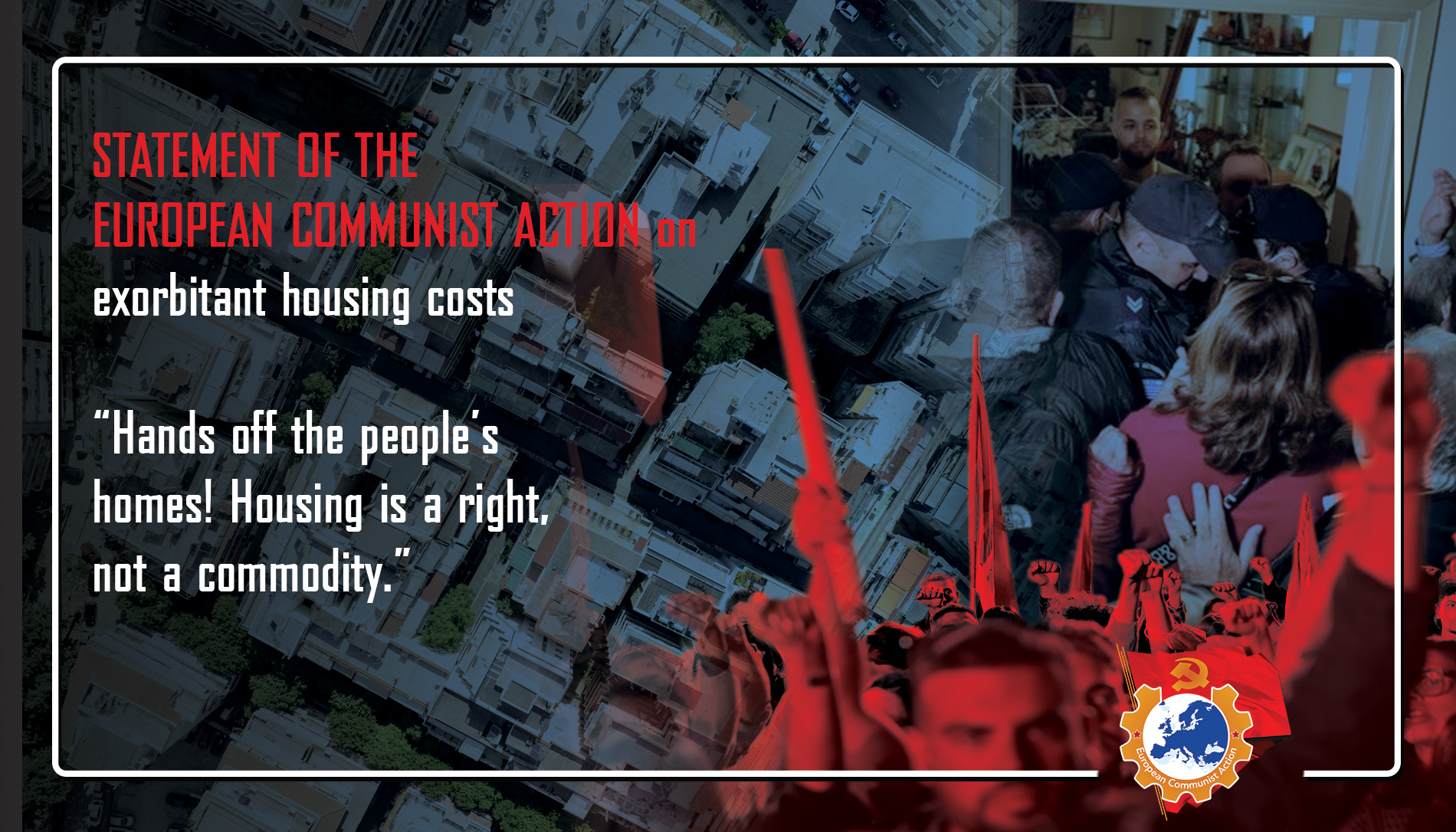
Europe is facing a deep and structural housing crisis that pushing the lives of millions of people across the continent to a dead end. Over the past decade, housing prices and rents have risen significantly faster than wages in the EU, pushing decent, affordable homes out of reach for workers and their families. Across the EU prices have risen dramatically, construction costs are rising while public investment in housing construction has sharply declined. According to official data, over the last decade (2015–2025) the housing market has become 63.6% more expensive, while rents have risen by at least 21.1%. More than 1.1 million people are homeless across the EU; 18 million people are facing severe housing deprivation; 75 million people are living in overcrowded conditions; 69 million people are living in substandard housing and over 64 million households are struggling with housing costs.
These conditions leave young working-class people, people in temporary or seasonal employment, older persons living on fixed incomes and migrants particularly vulnerable. This has been created by political choices rather than natural forces. This is not a matter of scarcity, it is the direct consequence of capitalist priorities which encourage more profitable luxury housing and green standards with a dramatic increase in building materials. People’s housing is treated as a commodity, and in this context it is controlled by profit-driven construction groups, banks and funds.
The evidence of swelling public housing waiting lists, overcrowded living conditions, and families forced to spend an unsustainable share of their income on rent, with thousands living in inadequate housing that lacks basic amenities, safety, comfort, or hygiene is a demonstration of the fundamental bankruptcy of the capitalist system.
This growing problem cannot be resolved by the capitalist “market” or by state and EU housing programmes.
Nor can the crisis be solved through the temporary relief measures promoted by the social democracy: rent subsidies, tax breaks, social housing and shelters for those evicted and so on. These measures respond to the need of the bourgeois governments to stop the class struggle and are, in fact, sometimes the result of concessions to the immediate struggles of the class, but they do not put a final resolution to the problem.
EU state aid rules and the provisions of the EU Stability and Growth Pact which compel member states to limit their annual budget deficit to 3% of their GDP and their public debt to 60% of GDP worsen the already critical situation. At the same time these EU rules are often broken when it serves the capitalist classes of Europe, as in the case of militarisation.
Housing is a human right. The resources, land, and capacity to guarantee that right exist but are constrained by a system committed to capitalist profit. A proper home requires habitability, affordability, accessibility, security, non-discrimination, and the ability to live in dignity. Stable and affordable housing is essential for access to employment, education, health services, and community life.
The parties of the ECA demand a massive development of high-quality public housing; proper protection for tenants; strict regulation of rents; an end to evictions into homelessness; ending homelessness through guaranteed housing and measures against the policies supporting capitalist profitability.
The parties of the ECA are at the forefront of the struggle against foreclosure auctions and the eviction of people from their primary residences and they stand in solidarity with affected households. They highlight that housing inequalities are inherent in, and the inevitable outcome of, an economic system based on private ownership, markets and the pursuit of profit giving rise to exploitation which can only be solved by its overthrow. Capitalism cannot provide for the needs of the people.
Only under socialism will housing become a universal right rather than a commodity.